
Digital Product Passport: Your Complete Guide
How PLM systems help fashion brands organise and structure the data required for EU compliance. Everything you need to know about the DPP and how to prepare.
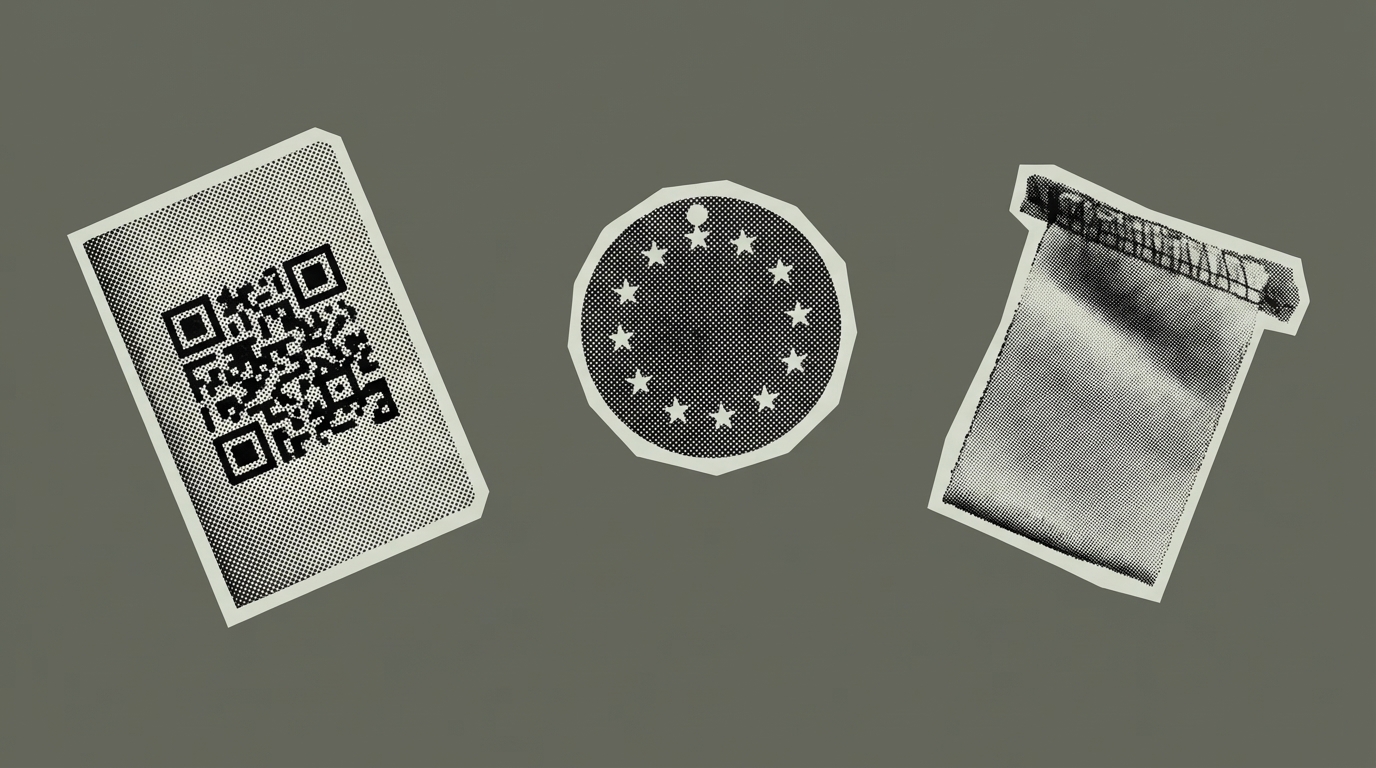
The Digital Product Passport (DPP) is a digital record accessible via QR codes on product labels that provides comprehensive information about a product's lifecycle. It's part of the EU's Ecodesign for Sustainable Products Regulation (ESPR), which became law in June 2024. For fashion and textile brands selling in the EU, the DPP will be mandatory starting in 2027.
What Is the Digital Product Passport?
The goal: enable consumers, recyclers, and regulators to make informed decisions and support the circular economy. The challenge: collecting and organising 16+ categories of product data across your entire supply chain.
Key Dates & Timeline
The ESPR Working Plan prioritises textiles and apparel for early implementation. Here's what brands need to know:
Required Data Categories
The DPP requires comprehensive information across 16+ categories. This data must be transparent for regulators and accessible to consumers via scannable QR codes.
The challenge: Most of this data lives in spreadsheets, emails, and supplier folders — not in a structured format that can be shared digitally. This is where PLM becomes essential.
How PLM Systems Enable DPP Compliance
Product Lifecycle Management software is the operational foundation for DPP compliance. It centralises the engineering, materials, and supply chain information needed to create verified, shareable product records.
Without a PLM system, brands face manual data collection across dozens of spreadsheets, inconsistent supplier information, and no clear audit trail. With PLM, you have a single source of truth that maps directly to DPP requirements.
Single source of truth for all product information, eliminating scattered spreadsheets and siloed data.
Track every component from raw material to finished product with full supplier visibility.
Detailed Bills of Materials with composition percentages, origins, and certifications.
Connect to carbon calculators, LCA tools, and ESG reporting platforms.
Workflows that gather required information from suppliers without manual chasing.
Create QR codes and NFC tags linked to your digital product records.
Give suppliers access to submit certifications, test results, and compliance data.
Complete history of changes for regulatory verification and transparency.
8-Step Preparation Checklist
Use 2025 to build your data infrastructure. Here's how to prepare:
Step 1 — Centralise all product information in your PLM system
Step 2 — Align suppliers on data requirements and collection processes
Step 3 — Run structured data audits to identify information gaps
Step 4 — Upgrade data carriers (QR codes, NFC chips, RFID tags)
Step 5 — Define repair and ownership record processes
Step 6 — Prepare sustainability datasets for carbon and emissions
Step 7 — Pilot the workflow with one product line before scaling
Step 8 — Monitor delegated acts for sector-specific requirement updates
Common Challenges & Solutions
Preparing for DPP compliance isn't without obstacles. Here's how to address the most common challenges:
Start supplier onboarding now. Use your PLM's supplier portal to standardise data collection with clear templates and deadlines.
Choose a PLM that integrates with your existing ERP, sustainability tools, and e-commerce platforms via APIs.
Modern cloud PLM solutions start at affordable monthly rates. The cost of non-compliance (fines, market exclusion) far exceeds investment.
Begin data collection in 2025. The data you gather now is what you'll report on in 2027. Don't wait for the delegated act.
The Bottom Line
Start Preparing Now If:
EU market — You sell textiles or apparel in the EU
Scattered data — Your supplier data lives across spreadsheets, emails, and drives
No centralised system — You don't have a structured product data platform
Avoid the rush — You want to avoid rushing implementation in 2026
Competitive advantage — You see sustainability as a differentiator, not just compliance
Prepare Your Brand for DPP Compliance
Kobo PLM helps fashion brands centralise product data, track materials and suppliers, and build the data infrastructure needed for Digital Product Passport compliance.
Start Free Trial